What happens when humanity creates something it can’t control… and realizes it too late?
The first glimpse of Captain Atom (2026) doesn’t just tease a superhero origin story—it feels like a warning.
And it lingers.
Long after the screen fades to black.
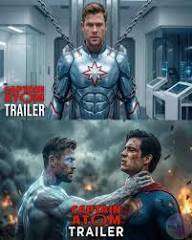
What This Film Is Really About
At its core, Captain Atom isn’t about power. It’s about consequence.
Nathaniel Adam begins as a soldier—disciplined, loyal, expendable. But when a shadowy experiment turns him into something beyond human comprehension, the film pivots into darker territory: the cost of transformation in a world obsessed with control.
This isn’t the usual “hero rises” arc.
It’s a story about what’s lost when a man becomes untouchable.
The chilling line—“They turned a soldier into a weapon… They turned a man into a god.”—isn’t just dialogue. It’s the thesis. And it lands like a quiet explosion.

Performance & Characters
Even in brief, enigmatic flashes, the cast signals something deeper than spectacle.
Chris Hemsworth

Hemsworth appears to lean into a more restrained intensity here, shedding his usual charismatic bravado for something colder, more haunted. If this tone holds, it could be one of his most compelling performances yet.
David Corenswet
There’s a quiet gravity to Corenswet’s presence—an almost fragile humanity that makes the transformation into Captain Atom feel tragic rather than triumphant.
John Cena
Cena’s role remains ambiguous, but that ambiguity works. Ally? Antagonist? Something in between? The tension is intentional—and effective.
No one feels safe in this story.

Visuals, Tone, and Direction
The visuals don’t just impress—they unsettle.
When Captain Atom’s body fractures into radiant energy, it’s not framed as power… it’s framed as instability. The sky ignites in silver, the earth trembles, and suddenly the spectacle becomes existential dread.
This is not a clean, polished superhero aesthetic.
It’s volatile.
Directorally, the tone leans closer to a psychological sci-fi thriller than a traditional comic book film. Think less triumph, more tension. Less heroism, more inevitability.
And that choice changes everything.

What Works — And What Doesn’t
- What Works:
- A haunting central concept that feels timely and dangerous
- Striking, memorable visuals that prioritize emotion over spectacle
- A tone that dares to question the very idea of a “hero”
- What Doesn’t (Yet):
- The concept trailer leaves key motivations intentionally vague
- Character dynamics are intriguing—but still undefined
- It risks becoming too abstract if not grounded in emotional stakes
It almost feels incomplete…
But that might be the point.

Final Verdict
Captain Atom (2026) isn’t trying to win you over with explosions—it’s trying to disturb you with possibility.
And it succeeds.
This could be the most dangerous kind of superhero story: one where the hero isn’t the solution… but the problem.
“Power doesn’t corrupt here—it isolates, fractures, and erases.”
If the full film delivers on this promise, we’re not looking at just another comic adaptation.
We’re looking at a cinematic reckoning.