There’s a moment in Killer Whale where the ocean goes quiet—too quiet—and you realize this isn’t just another creature feature.
This is something colder. Smarter. And far more personal.
Because beneath the surface, this film isn’t about survival at all. It’s about guilt—and what happens when it comes back to hunt you.
What This Film Is Really About
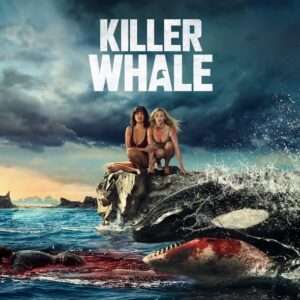
On paper, Killer Whale sounds like familiar territory: two best friends, Trish Stevens and Maddie Clark, stranded at sea, stalked by an orca.
But that’s the bait.
The hook is far deeper.
Director Jo-Anne Brechin reframes the survival thriller into something far more psychological. The orca isn’t just a predator—it’s a manifestation of unfinished history, a silent witness to a past neither woman has truly escaped.
This isn’t man vs. nature. It’s memory vs. survival.
And memory doesn’t let go easily.

Performance & Characters
Virginia Gardner and Melanie Jarnson carry this film almost entirely on their shoulders—and remarkably, they don’t just survive it. They elevate it.
Virginia Gardner as Trish
Gardner plays Trish with a controlled intensity that slowly fractures under pressure. Her performance is a masterclass in restraint—until it isn’t.
And when it breaks, it breaks hard.
Melanie Jarnson as Maddie
Jarnson brings emotional volatility to Maddie, balancing fear with something darker—resentment. There’s history here, and the film wisely lets it simmer before boiling over.
Their chemistry feels lived-in. Messy. Real.
Mitchell Hope, in a supporting role, adds just enough grounding presence without pulling focus from the central dynamic.

Visuals, Tone, and Direction
The ocean has rarely felt this claustrophobic.
Brechin’s direction turns open water into a suffocating arena, where every ripple could mean death. The cinematography leans into wide, isolating shots, only to snap into tight, panic-inducing close-ups when danger strikes.
And the orca?
Used sparingly. Brilliantly.
Instead of overexposure, the film relies on suggestion—the shadow beneath the surface, the sudden stillness, the absence of sound.
It’s not what you see.
It’s what you think you saw.

What Works — And What Doesn’t
- What Works:
- Psychological tension layered beneath a survival narrative
- Strong, emotionally charged performances
- Atmospheric direction that turns simplicity into suspense
- A surprisingly intelligent use of the “monster” trope
- What Doesn’t:
- Pacing occasionally drifts in the second act
- Some backstory elements feel slightly underexplored
- Viewers expecting nonstop action may find it too introspective
It almost loses momentum halfway through…
But then it tightens its grip again—and doesn’t let go.
Final Verdict
Killer Whale is not the film its title suggests—and that’s exactly why it works.
It trades spectacle for tension. Noise for silence. Fear for something deeper: reckoning.
“The most terrifying thing in the ocean isn’t the predator—it’s what it remembers.”
This won’t be everyone’s cup of saltwater. But for those willing to dive beneath the surface, it offers a haunting, character-driven thriller that lingers long after the credits roll.
Rating: 7.5/10
Unexpected. Uneasy. And quietly devastating.