What happens when Batman stops being the most fascinating person in Gotham?
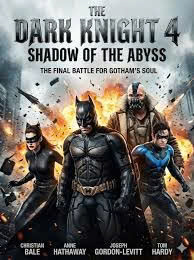
That question hangs over The Dark Knight 4: Shadows of Gotham (2026) like smoke above a burning skyline. Because despite the return of Christian Bale’s Bruce Wayne, this isn’t merely another Batman comeback story.
Not even close.
It’s a power struggle disguised as a superhero thriller—where seduction, control, and psychological warfare become more dangerous than bullets.
And Gotham has never looked this unstable.
What This Film Is Really About
At first glance, The Dark Knight 4: Shadows of Gotham appears to follow familiar territory. Gotham is collapsing once again. Criminal empires evolve. Mercenaries seize control of the streets. Bruce Wayne emerges from isolation because the city calls him back.
But beneath the gadgets, violence, and towering cityscapes lies something more intriguing.
This film isn’t truly about Batman.
It’s about control.
Who controls fear.
Who controls desire.
And who controls Gotham itself.
Florence Pugh’s Pamela Isley, stepping into the mantle of Poison Ivy, enters not as a traditional comic-book villain but as something far more unsettling: a manipulator who weaponizes beauty, confidence, and ideology.
She doesn’t simply want to destroy Gotham.
She wants Gotham to willingly surrender.
That distinction matters.

Performance & Characters
Christian Bale Returns With a Different Kind of Batman
Christian Bale understands Bruce Wayne better than most actors ever have.
Not because of physicality.
Because of exhaustion.
This version of Bruce feels older, emotionally scarred, and haunted by years Gotham never allowed him to escape.
His Batman isn’t fueled by rage anymore.
He’s fueled by necessity.
And that’s infinitely more interesting.
Anne Hathaway Quietly Hijacks Entire Scenes
Anne Hathaway returns as Selina Kyle with a confidence that borders on dangerous.
Sharper. Smarter. Colder.
Her Catwoman feels less like a side character and more like a force Gotham accidentally unleashed years ago.
Every entrance feels intentional.
Every glance feels calculated.
Even standing still, she controls momentum.
And yes—she steals scenes.

Florence Pugh’s Poison Ivy Becomes Gotham’s Wild Card
This is where things become unexpectedly fascinating.
Florence Pugh avoids cartoon villain territory entirely. Instead, she plays Pamela Isley with unsettling precision—equal parts elegance, intellect, and quiet menace.
She isn’t trying to dominate through brute force.
She’s trying to make destruction seductive.
- Cold confidence
- Psychological manipulation
- Stylized menace
- Calculated unpredictability
And somehow, that feels scarier.
A lot scarier.
Visuals, Tone, and Direction
Gotham has always been a character.
But here, Gotham feels infected.
Neon reflections bleed across rain-soaked streets. Towering skylines feel colder. Shadows stretch longer than normal, as if the city itself knows something is wrong.
The visual design walks a strange line between Nolan-style realism and heightened comic-book intensity.
And surprisingly, it works.
Mostly.
Action scenes lean heavily into tactical combat and brutal close-quarters fighting rather than endless CGI overload.
The gadgets remain gloriously excessive.
Because Batman without gadgets is just a traumatized billionaire with commitment issues.
“Some cities create heroes. Gotham creates survivors.”
That emotional truth runs through every frame.

What Works — And What Doesn’t
What Works
- Christian Bale returns with emotional gravity
- Anne Hathaway’s Catwoman feels revitalized
- Florence Pugh delivers a memorable new interpretation of Poison Ivy
- Strong psychological tension throughout
- Stylish visuals with genuine atmosphere
What Doesn’t
- Some mercenary characters feel underdeveloped
- Certain plot threads compete for attention
- The shift toward larger spectacle occasionally clashes with grounded realism
It almost loses itself in style… but then it remembers Gotham’s greatest strength.
The people hiding behind the masks.
Final Verdict

The Dark Knight 4: Shadows of Gotham (2026) doesn’t try to recreate the lightning strike that made Christopher Nolan’s trilogy legendary.
Instead, it risks becoming something else entirely.
Darker.
Stranger.
More seductive.
And occasionally more dangerous.
Because this isn’t simply Batman versus another villain.
It’s Gotham fighting for its identity.
And for long stretches, that battle becomes impossible to ignore.
Early Rating: 8.9/10
In Gotham, shadows don’t hide monsters.
Sometimes they create them.