Most monster movies want to entertain you.
Leviathan (2026) wants to drown you in dread.
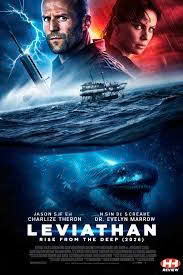
Somewhere between the crushing darkness of the deep ocean and humanity’s obsession with forbidden discovery, this massive sci-fi horror thriller taps into a fear most modern blockbusters have forgotten: the terror of the unknown. And the strangest part? The film’s most frightening monster may not be the creature lurking beneath the sea floor — it may be human ambition itself.
That idea lingers long after the explosions stop.
What This Film Is Really About
On the surface, Leviathan looks like a familiar deep-sea survival spectacle: an elite underwater research mission goes catastrophically wrong after discovering evidence of an ancient lifeform hidden beneath the ocean floor.
But beneath the action and creature horror lies something far more unsettling.
This is a film about humanity crossing lines it was never meant to cross.
The ocean in Leviathan is not simply a setting. It feels ancient, hostile, almost mythological — like a living graveyard protecting secrets older than civilization itself. The deeper the expedition descends, the more the movie shifts from action thriller into existential horror.
And surprisingly, that tonal evolution works brilliantly.
The screenplay smartly avoids turning the creature into just another CGI monster. Instead, the Leviathan is treated like an apocalyptic force of nature — something closer to a forgotten god than an animal.
Every sonar pulse.
Every distant metallic groan.
Every silence in the black water feels like a warning.

Performance & Characters
Dwayne Johnson Delivers One of His Most Human Performances in Years
Dwayne Johnson has spent years perfecting the unstoppable action-hero formula. Here, he finally lets vulnerability crack through the armor.
As a former military diver forced into impossible survival decisions, Johnson gives the film physical power while also grounding it emotionally. His character is not invincible. He’s exhausted, haunted, and increasingly terrified by what he realizes they’ve awakened.
And that fear becomes contagious.
There’s one particular sequence inside a collapsing underwater station where Johnson says almost nothing for nearly two minutes — relying entirely on facial expression and physical tension. It’s arguably the strongest dramatic moment of his recent career.

Angelina Jolie Brings Mystery, Intelligence, and Emotional Weight
Angelina Jolie plays the film’s most fascinating wildcard: a scientist whose knowledge of the creature’s origins slowly reveals a horrifying conspiracy buried beneath the mission.
She doesn’t overplay the role.
That restraint becomes her greatest weapon.
Jolie gives the movie an eerie emotional intelligence, especially in quieter scenes where the story explores guilt, obsession, and the cost of discovery. Her chemistry with Johnson is unexpectedly effective because it avoids forced romance and instead builds tension through distrust and shared trauma.
“The ocean remembers everything humanity tries to bury.”
That line alone feels destined to become one of the film’s most quoted moments.
Visuals, Tone, and Direction
If Alien, The Abyss, and Godzilla collided under crushing ocean pressure, the result might look something like Leviathan.
The film’s visual direction is stunningly oppressive in the best possible way. The underwater environments feel claustrophobic, cold, and terrifyingly vast all at once. Instead of relying on nonstop chaos, the cinematography weaponizes darkness and isolation.
Sometimes the screen shows almost nothing.
That’s when the movie becomes most effective.
The sound design deserves enormous praise. Metallic echoes, distant whale-like frequencies, creaking steel, and sudden silence create an atmosphere that constantly keeps the audience uneasy.
The creature design itself is wisely restrained for much of the runtime. The film understands a fundamental truth of horror cinema:
What you barely see often terrifies you more than what you fully see.
And when the Leviathan finally emerges in full scale, the payoff feels massive.
What Works — And What Doesn’t
What Works
- Immense atmosphere: The film creates genuine tension instead of relying solely on jump scares.
- Surprisingly emotional performances: Both leads bring more depth than expected.
- Excellent pacing: The slow-burn mystery gradually transforms into full survival horror.
- Strong mythology: The ancient-creature lore adds intrigue without overexplaining everything.
- Visual scale: Few recent monster films feel this cinematic.
What Doesn’t
- Some exposition-heavy dialogue: A few scenes explain too much when mystery would have been stronger.
- Supporting characters lack development: Several crew members exist mainly to increase body count tension.
- The third act risks becoming too blockbuster-heavy: The intimate horror occasionally gets overshadowed by large-scale action spectacle.
Still, the film almost loses itself in excess… and then somehow pulls back just enough to stay emotionally grounded.
That balance matters.

Final Verdict
Leviathan (2026) is more than a creature feature. It’s a pressure-cooker nightmare about curiosity, power, and the terrifying realization that humanity may not belong in the deepest corners of the Earth.
It’s intense.
It’s visually overwhelming.
And at times, genuinely unsettling.
What makes the film memorable is not simply the monster — it’s the feeling the movie leaves behind. That lingering sense that something ancient could still be waiting beneath us, hidden in darkness, patient enough to outlive history itself.
Not every moment works perfectly. But when Leviathan embraces its horror roots and psychological tension, it becomes the kind of blockbuster modern Hollywood rarely dares to make anymore: ambitious, atmospheric, and frighteningly serious about its own mythology.
Final Rating: 8.5/10
A brutal deep-sea thriller that turns the ocean into pure cosmic horror — and reminds audiences that sometimes the scariest place on Earth is the one we understand the least.