Superhero movies usually ask one question: Can the hero save the world?
Wonder Woman 3 (2026) dares to ask something far more dangerous: What happens when saving the world means sacrificing yourself?
And that changes everything.
Because beneath its mythological warfare, god-sized spectacle, and thunderous action sequences lies something unexpectedly human — a story about faith, grief, and the unbearable weight of hope.
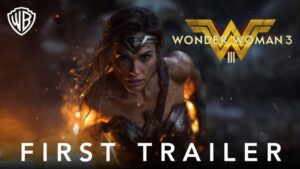
This isn’t just Diana Prince fighting monsters.
It’s Diana fighting destiny itself.
What This Film Is Really About
On the surface, Wonder Woman 3 (2026) delivers exactly what audiences expect: forgotten gods awakening, ancient powers rising from Olympus, and humanity once again standing at the edge of collapse.
But look closer.
This film isn’t really about gods.
It’s about a world that has forgotten how to believe in goodness.
Diana has spent centuries protecting humanity from darkness hiding between myth and reality. But now, as civilization becomes increasingly fractured by fear, power, and division, she begins questioning the mission that has defined her existence.
That emotional conflict becomes the movie’s true battlefield.
And it almost hurts more than the physical one.
The most fascinating twist arrives when Diana is forced to confront unsettling truths surrounding her divine origins and destiny. The film repeatedly asks whether fate is liberation… or imprisonment.
That tension gives every battle unexpected emotional weight.

“True strength isn’t carrying the world on your shoulders. It’s refusing to let darkness convince you to put it down.”
That’s the heartbeat of this story.
Performance & Characters
Diana Prince Feels More Human Than Ever
The greatest surprise in Wonder Woman 3 isn’t its scale.
It’s vulnerability.
Diana carries centuries of loss behind every decision, and this chapter leans heavily into emotional exhaustion rather than invincibility. She’s still powerful, still inspiring—but now there are visible cracks in the armor.
And those cracks matter.
Because for perhaps the first time, Wonder Woman feels genuinely uncertain.
The New Villain Brings Dangerous Complexity
The new enemy arrives with a chilling philosophy built around “true justice,” and that ideological conflict elevates the narrative beyond another hero-versus-villain formula.
The villain isn’t simply trying to conquer.
They’re trying to convince.
That’s far scarier.
Great antagonists force heroes to question themselves. The strongest ones force audiences to do the same.

Visuals, Tone, and Direction
Visually, this may be the most ambitious Wonder Woman film yet.
The mythological scale feels enormous: gods emerging from forgotten realms, collapsing celestial landscapes, armies clashing between myth and humanity.
And yet the movie’s biggest moments aren’t explosions.
They’re silences.
One glance.
One impossible decision.
One moment where Diana says more with pain in her eyes than entire scenes of dialogue ever could.
The tonal balance almost shouldn’t work.
Ancient mythology collides with emotional intimacy.
Massive war scenes collide with personal heartbreak.
It almost collapses under its own weight…
But then it surprises you.
Somehow, the emotional center keeps pulling everything back together.
What Works — And What Doesn’t
What Works
- Epic mythological world-building that expands Diana’s universe
- Emotional stakes that feel deeply personal
- A stronger focus on sacrifice and consequence
- Large-scale action with genuine narrative purpose
- A philosophical conflict bigger than physical combat
What Doesn’t
- Some mythology-heavy exposition may overwhelm casual viewers
- Certain story threads feel almost too ambitious
- The massive scope occasionally threatens character intimacy
But even its flaws come from reaching too far rather than playing too safe.
And blockbuster cinema desperately needs more of that.

Final Verdict
Wonder Woman 3 (2026) isn’t trying to be another superhero sequel.
It’s aiming for something larger.
A modern myth.
A tragedy.
A story about hope standing alone against a world addicted to fear.
There is something strangely moving about watching an immortal warrior realize that strength has never truly been about power.
It’s about choosing compassion when the world gives you every reason not to.
And maybe that’s why this chapter feels different.
Because long after the gods, battles, and spectacle disappear from memory, one question remains:
What if heroes don’t save humanity by fighting for us…
What if they save us by reminding us who we’re supposed to be?
That question lingers.
Like every great legend should.