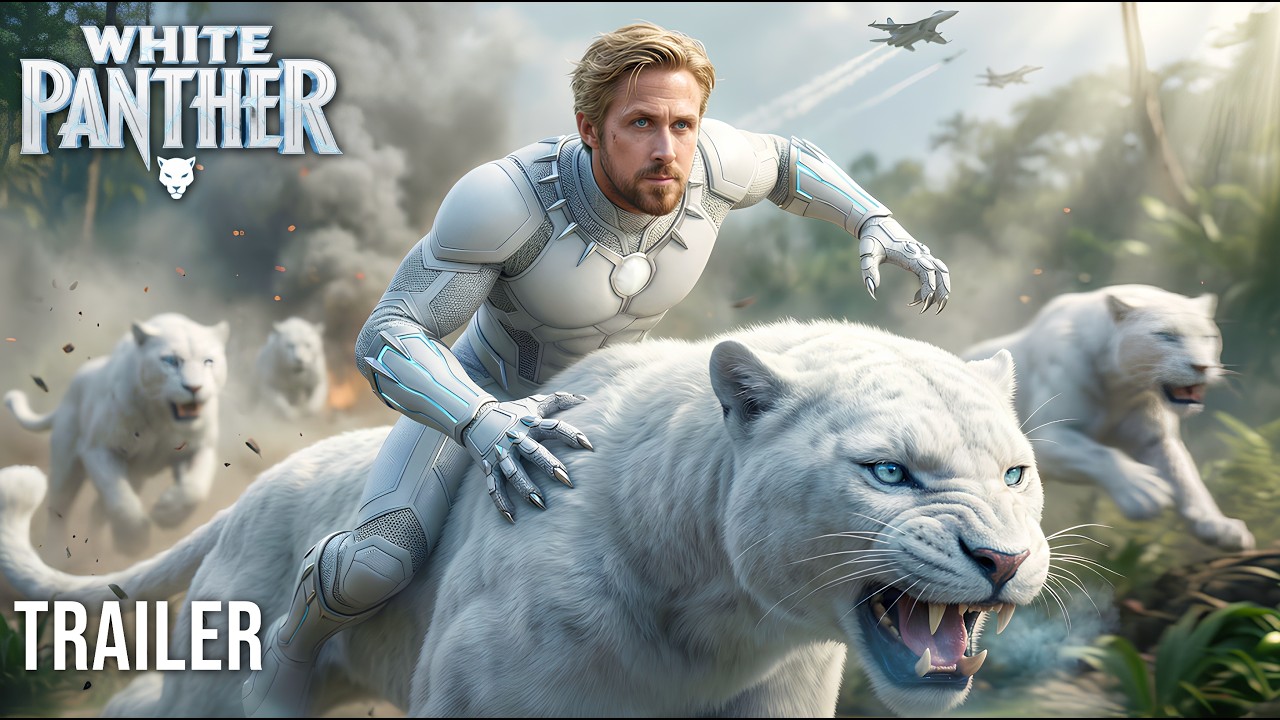
There’s a reason the idea of White Panther instantly sparks controversy.
Not because audiences reject new heroes — but because legacy is sacred, especially in a universe as emotionally powerful as Wakanda’s.

And yet, the moment this story begins unfolding — hidden kingdoms, ancient vibranium, fractured identity, and a warrior caught between vengeance and honor — something unexpected happens:
You stop thinking about comparison.
You start thinking about destiny.
What This Film Is Really About
On paper, White Panther (2026) sounds like another expansion of the superhero machine: a mysterious new protector rises, hidden powers awaken, global forces threaten an ancient civilization.
But beneath the spectacle lies a far more compelling conflict.
This is a story about identity under pressure.
About what happens when a symbol no longer belongs to the past… but becomes a battleground for the future.

The hidden kingdom beyond Wakanda immediately introduces fascinating mythology. Instead of simply copying the Black Panther formula, the story explores an entirely different cultural and emotional perspective — one rooted not in global power, but survival through secrecy.
That changes the emotional tone completely.
The White Panther is not stepping into a thriving empire.
He’s stepping into a civilization terrified of being discovered.
And in today’s world, that fear feels strangely real.
Performance & Characters
Michael B. Jordan Brings Fire to Every Frame
If Michael B. Jordan truly leads this project, the casting alone carries enormous emotional weight.
Jordan has always possessed a rare cinematic quality: intensity without losing vulnerability. Whether in Creed or Black Panther, he understands how to weaponize emotion.
That matters here.
Because the White Panther cannot simply be powerful.
He has to feel torn apart internally.
The story repeatedly emphasizes conflict between loyalty and revenge, justice and rage. Jordan thrives in exactly that territory. His strongest performances emerge when characters are fighting themselves as much as their enemies.
And honestly, that emotional contradiction could make this character unforgettable.
“The most dangerous warriors are the ones trying desperately not to become monsters.”
A Hero Defined by Burden, Not Glory
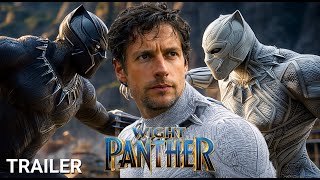
Unlike traditional superhero origins built around triumph, White Panther appears soaked in emotional tension.
The protector’s role feels less like an honor… and more like a curse passed through generations.
Every leap across the glowing skyline, every brutal confrontation in underground networks, carries emotional consequence. The White Panther doesn’t move like a celebrity hero.
He moves like someone carrying history on his back.
That distinction gives the character surprising dramatic depth.The Villains May Be the Film’s Most Important Element
The most intriguing aspect of the story may not be the hero at all.
It’s the idea that rival factions want to redefine the Panther legacy itself.
That creates ideological conflict instead of simple good-versus-evil storytelling. The enemy isn’t merely trying to destroy the hidden kingdom — they want to reshape its purpose.
That’s far more dangerous.
And far more interesting.
Visuals, Tone, and Direction
Visually, White Panther sounds absolutely stunning.
The contrast between futuristic skyscrapers and ancient hidden civilizations creates a rich cinematic atmosphere filled with tension, mystery, and mythological scale.
The city itself almost feels alive.
Breathing.
Watching.
Every description suggests a world drenched in neon shadows, political paranoia, and spiritual symbolism. Instead of relying purely on CGI spectacle, the film appears focused on mood — blending superhero action with almost noir-like emotional darkness.
That tonal direction could separate it from generic Marvel imitators immediately.
And then there’s the vibranium concept.
The introduction of a rare, mysterious variation of vibranium opens fascinating possibilities. If explored properly, it could redefine power dynamics across the entire mythology while giving the White Panther abilities visually distinct from previous heroes.
That’s critical.
Because this character must feel original, not derivative.
What Works — And What Doesn’t
What Works
- A darker, emotionally richer superhero concept
- Strong themes of identity, secrecy, and legacy
- The hidden kingdom mythology feels genuinely compelling
- Michael B. Jordan brings immediate dramatic credibility
- The rare vibranium concept expands the universe intelligently
What Doesn’t
- The title alone risks immediate controversy and backlash
- Comparisons to Black Panther are unavoidable
- The film must avoid feeling like a recycled mythology expansion
- If the villains lack nuance, the emotional themes could collapse under spectacle
Because that’s the danger here.
White Panther walks an incredibly thin line between bold reinvention and audience rejection.
One wrong step, and the entire concept falls apart.
But if it succeeds?
It could become one of the most emotionally layered superhero films in years.
Final Verdict
White Panther (2026) feels less like a traditional superhero movie and more like a mythological war drama disguised as blockbuster entertainment.
At its core, this isn’t merely about saving a city or defeating enemies.
It’s about protecting identity in a world desperate to consume it.
The hidden kingdom mythology is fascinating. The emotional themes feel heavier than expected. And the White Panther himself appears positioned not as a flawless hero, but as a symbol fractured by responsibility, vengeance, and fear.
That emotional complexity could become the film’s greatest strength.
Because audiences today don’t just want heroes anymore.
They want scars.
And White Panther looks absolutely covered in them.
Early Rating: 8.7/10 — A visually hypnotic and emotionally charged superhero epic that could either redefine modern comic-book mythology… or ignite one of the most divisive franchise debates in years.