For decades, Hollywood has tried to tame Mortal Kombat.
That was always the mistake.
“Mortal Kombat 2” doesn’t try to soften the chaos. It weaponizes it.
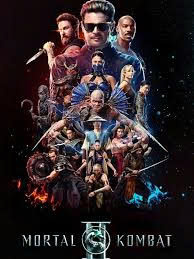
This sequel arrives like a bloodstained uppercut to the modern blockbuster formula — louder, darker, nastier, and far more confident in its own madness. The result is not just a better Mortal Kombat movie.
It may be the first one that truly captures the savage soul of the games.
What This Film Is Really About
Yes, Mortal Kombat 2 (2026) delivers everything fans expect: bone-crushing fights, supernatural warfare, brutal fatalities, and enough martial arts spectacle to satisfy even longtime franchise loyalists.
But beneath the violence lies something surprisingly effective.
A story about fear.
Not fear of dying.
Fear of losing an entire world.
Outworld no longer feels like a distant threat lurking in shadows. It arrives as an unstoppable force prepared to erase Earthrealm completely. Every battle carries apocalyptic weight because the fighters understand there is no reset button this time.
No mercy.
No escape.
No second chances.
That desperation gives the movie momentum far beyond simple tournament spectacle.
“The most terrifying thing about Mortal Kombat 2 isn’t the violence — it’s how quickly hope disappears once the tournament begins.”

Performance & Characters
The Veteran Fighters Return With Real Presence
One of the sequel’s greatest strengths is how confidently it handles its returning warriors. These characters no longer feel like introductions waiting for development. They feel battle-scarred, emotionally hardened, and fully shaped by the brutal mythology surrounding them.
Every fighter enters the arena carrying history.
And pain.
The film wisely leans into that emotional weariness rather than turning everyone into invincible action machines. Even the strongest champions feel vulnerable under the weight of what’s coming.
The New Challengers Bring Chaos
The sequel injects fresh energy through its newer fighters, many of whom arrive with genuinely intimidating screen presence. Some feel unpredictable, others terrifyingly disciplined, but all of them contribute to the growing sense that Earthrealm may already be doomed.
And that tension matters.
Because this movie works best when it feels unstable.
When every fight seems capable of ending in disaster.
Or dismemberment.

Visuals, Tone, and Direction
This movie is unapologetically violent.
Not sanitized blockbuster violence.
Not quick-cut superhero action.
Violence with impact.
Bones snap like gunfire. Blades carve through armor and flesh with horrifying precision. Fatalities are pushed to grotesque new extremes, yet the film rarely treats them like cheap gimmicks. Instead, they become part of the world’s brutal logic — a realm where survival itself demands brutality.
The visual design is equally impressive.
Outworld looks massive, ancient, and spiritually corrupted. Entire landscapes feel carved from fire and death. Meanwhile, Earthrealm carries the exhausted atmosphere of a civilization preparing for extinction.
The direction embraces fantasy spectacle without losing the grounded physicality of martial arts combat. That balance gives the action sequences real energy instead of drowning them in meaningless CGI overload.
And some fights are genuinely spectacular.
Not just visually.
Emotionally.
What Works — And What Doesn’t
What Works
- Brutal, crowd-pleasing combat sequences
- Fatalities that finally feel worthy of the franchise
- A darker and more confident tone
- Excellent world-building for Outworld
- Stronger emotional stakes than expected
- Veteran characters handled with far more depth
What Doesn’t
The film occasionally struggles under the weight of its expanding mythology. Some characters inevitably receive less development simply because the roster has become so massive.
A few exposition-heavy scenes also briefly slow the pacing between major battles.
But then the movie detonates again.
A new challenger enters the arena.
A fatality shocks the audience into silence.
A warrior falls.
And suddenly you’re completely locked back in.

Final Verdict
Mortal Kombat 2 (2026) is everything the first film wanted to be — larger, bloodier, emotionally heavier, and infinitely more confident.
It understands that Mortal Kombat was never meant to feel clean or safe. This universe thrives on chaos, brutality, fear, and mythological madness. Instead of resisting that identity, the sequel fully embraces it.
And that decision changes everything.
Because beneath the savage combat and relentless spectacle lies a surprisingly effective tragedy about warriors forced into impossible choices while entire realms collapse around them.
This isn’t just tournament entertainment anymore.
It’s war.
And by the time the final battle erupts, the film leaves behind something modern blockbusters rarely achieve:
Consequences.
Early Rating: 9.0/10
An explosive, merciless martial arts fantasy epic that finally unleashes the full savage potential of the Mortal Kombat universe.