What if the greatest martial artist alive couldn’t punch his way out of reality collapsing?
What if the past, present, and future all turned against him—at once?
doesn’t just raise the stakes—it fractures them.
This is not a sequel that plays it safe. It dares to dismantle its own hero.
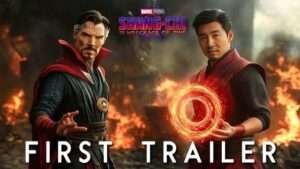
What This Film Is Really About
On the surface, this is a story about time unraveling. Cities flicker between centuries. Warriors appear from timelines that shouldn’t exist. The Ten Rings—once symbols of power—become unstable relics tied to something far more dangerous.
But beneath the spectacle, the film is asking a far more unsettling question:
Who are you when time itself refuses to remember you?
is no longer just balancing two worlds—he’s trying to hold onto a version of himself that reality keeps rewriting. The Rings aren’t weapons anymore. They’re a ticking paradox.
And every second counts.

Performance & Characters
The emotional core of the film lies in Shang-Chi’s internal fracture. He’s not just fighting enemies—he’s fighting alternate versions of possibility.
A Hero Divided
- Moments of quiet humanity clash with bursts of chaotic combat
- His restraint becomes more powerful than his punches
- Every decision feels like it could erase him entirely
It’s a performance built on tension—controlled, simmering, and occasionally explosive.
And then come the echoes.
Warriors from broken timelines—some noble, some monstrous—appear like ghosts of roads not taken. Each encounter feels like a mirror… distorted, but recognizable.
They aren’t just enemies. They’re warnings.

Visuals, Tone, and Direction
This is where the film becomes unforgettable.
The visual language of time distortion is nothing short of hypnotic:
- Cities glitching between ancient dynasties and neon futures
- Battlefields folding in on themselves mid-fight
- Moments where gravity, motion, and logic simply… stop
The direction leans into controlled chaos. Scenes don’t transition—they rupture.
And somehow, it works.
Because the confusion is the point.
You’re not supposed to feel stable.

What Works — And What Doesn’t
What Works
- A bold, high-concept narrative that elevates the sequel beyond standard superhero fare
- Emotionally driven action that feels purposeful, not decorative
- A thematic depth centered on identity, destiny, and temporal fragility
What Doesn’t
- The complexity can overwhelm—some viewers may feel lost in the shifting timelines
- Certain supporting characters get lost in the chaos
- The pacing occasionally stumbles under the weight of its ambition
It almost collapses under its own ideas…
But then—unexpectedly—it finds clarity in stillness.

Final Verdict
This isn’t just a sequel. It’s a transformation.
Shang-Chi 2: The Wreckage of Time trades simplicity for ambition, certainty for instability, and spectacle for something far more unsettling: introspection.
It demands patience. It demands attention.
But if you surrender to its rhythm, it delivers something rare in modern blockbuster cinema—
a story that lingers long after the fight is over.
Because in the end, the most terrifying enemy isn’t a villain.
It’s the version of yourself that time chooses to erase.