What happens when a legend refuses to evolve… and instead forces the world to catch up?
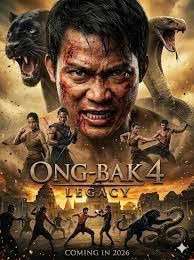
“Ong Bak 4” doesn’t ask for your attention — it grabs you by the throat, drags you into a burning temple, and dares you to look away.
You won’t.
Because this isn’t just another Muay Thai movie. It’s a warning shot to an industry drowning in CGI.
What This Film Is Really About

At its core, “Ong Bak 4” is a story about preservation — not just of culture, but of identity in a world rapidly losing both.
:contentReference[oaicite:0]{index=0} returns as a hardened village protector, a man caught between ancient traditions and a modern enemy armed with technology, greed, and zero respect for heritage.

The conflict is simple on paper:
- A sacred village
- A ruthless crime lord
- A clash between old-world discipline and modern violence
But beneath the surface, it’s something deeper.
It’s about what we lose when we choose convenience over authenticity.
And the film makes sure you feel every second of that loss — physically.
Performance & Characters

Tony Jaa doesn’t just perform.
He endures.
Every movement feels earned. Every strike carries weight. There’s no flashy choreography designed for applause — only survival-driven brutality that feels terrifyingly real.
This is arguably his most stripped-down, raw performance since :contentReference[oaicite:1]{index=1}.
No gimmicks. No shortcuts.
Just pain, precision, and purpose.
The antagonist, a cold embodiment of modern destruction, serves less as a character and more as a force — calculated, mechanical, and disturbingly believable.
And that contrast?
It works.
Because the film isn’t asking you to like its characters — it’s forcing you to understand what they represent.

Visuals, Tone, and Direction
Let’s be clear:
This film is violent.
But not in the way you expect.
There’s no glossy, over-produced spectacle. Instead, the camera lingers just long enough to make you uncomfortable — to remind you that every impact matters.
The standout sequence — a relentless, bone-crushing fight inside a burning temple — is nothing short of extraordinary.
No wires. No illusions.
Just fire, flesh, and fury.
It’s one of the most visceral action set pieces in recent memory.
The direction leans heavily into realism, almost defiantly rejecting modern action tropes. The pacing builds like a slow burn — and then explodes without warning.
You feel it in your chest.

What Works — And What Doesn’t
What Works
- Authenticity: The zero-wire, real-stunt approach gives every fight unmatched intensity.
- Emotional weight: Beneath the action lies a powerful message about cultural erosion.
- Tony Jaa’s performance: Raw, physical, and deeply committed.
What Doesn’t
- Polarizing style: Some viewers may find its stripped-down realism lacking spectacle.
- Minimal exposition: The film doesn’t hold your hand — and not everyone will appreciate that.
It almost alienates you…
But then it pulls you back in with something undeniable:
Truth.

Final Verdict
“Ong Bak 4” isn’t trying to please everyone.
And that’s exactly why it works.
In an era where action films are increasingly artificial, this film dares to be real — painfully, unapologetically real.
“It doesn’t just break bones — it breaks expectations.”
With a reported score hovering around 8.8/10, the buzz isn’t just hype — it’s a reaction.
A reaction to something we haven’t felt in a long time.
Impact.
So the real question isn’t whether “Ong Bak 4” is good.
It’s whether modern audiences are ready for a film that refuses to fake anything.
The legend doesn’t evolve.
It reminds you why it became a legend in the first place.