Starring: Melissa McCarthy, Jamie Lee Curtis, Paul Rudd, Octavia Spencer
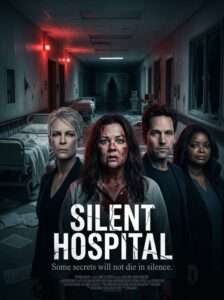
At the center of the chaos is Melissa McCarthy’s Cindy, a nurse whose humor feels less like comic relief and more like a defense mechanism. McCarthy plays her with a sharp edge, balancing sarcasm and fear in a way that makes her instantly relatable. She’s the kind of character who laughs at danger—until the moment she can’t anymore.
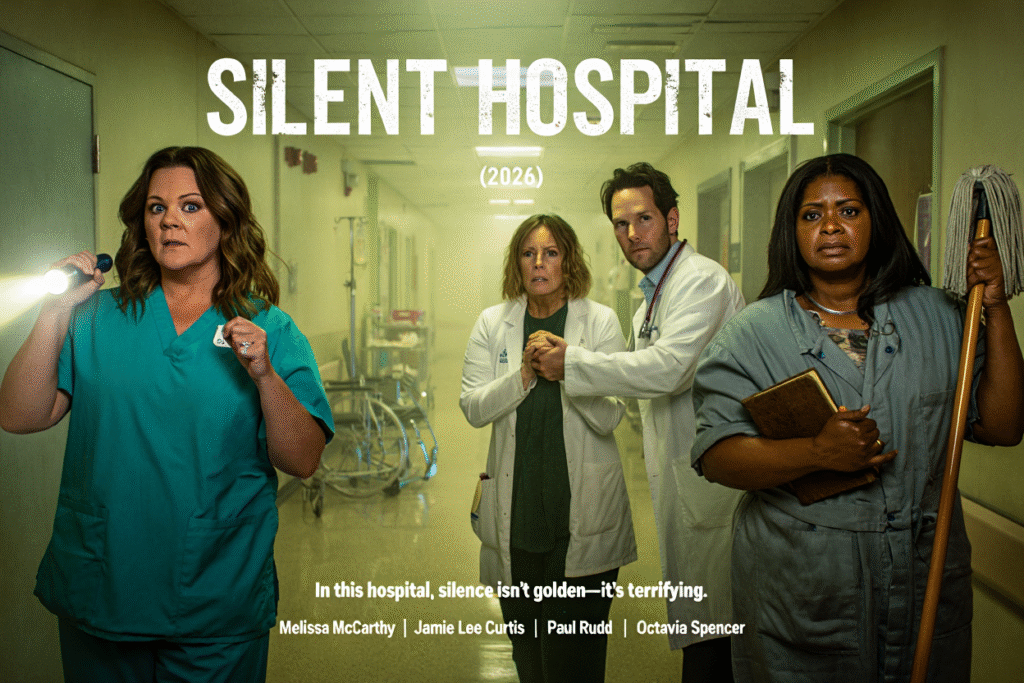
Paul Rudd’s Ben begins as the rational outsider, the audience’s anchor to logic. But as the film progresses, his skepticism erodes in unsettling ways. Watching him slowly lose his grip on certainty becomes one of the film’s most effective emotional arcs, turning disbelief into dread.
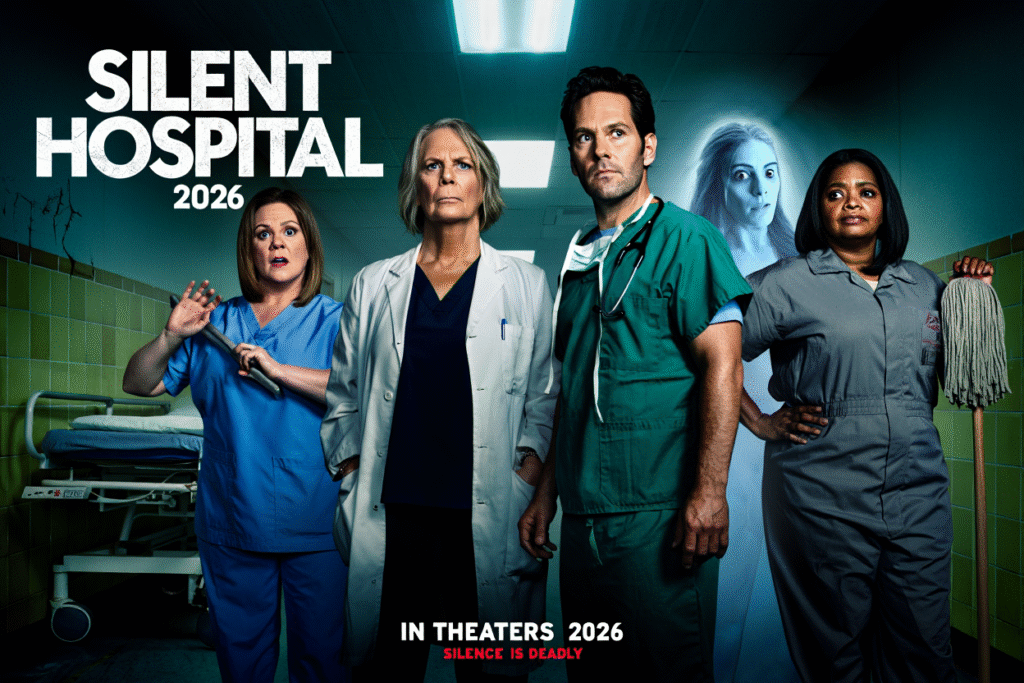
What elevates Silent Hospital beyond a standard horror-comedy is its use of silence as a narrative weapon. This isn’t just about jump scares—it’s about absence. The film creates long, suffocating stretches where sound disappears entirely, forcing both characters and audience into an uneasy awareness of every movement, every breath.
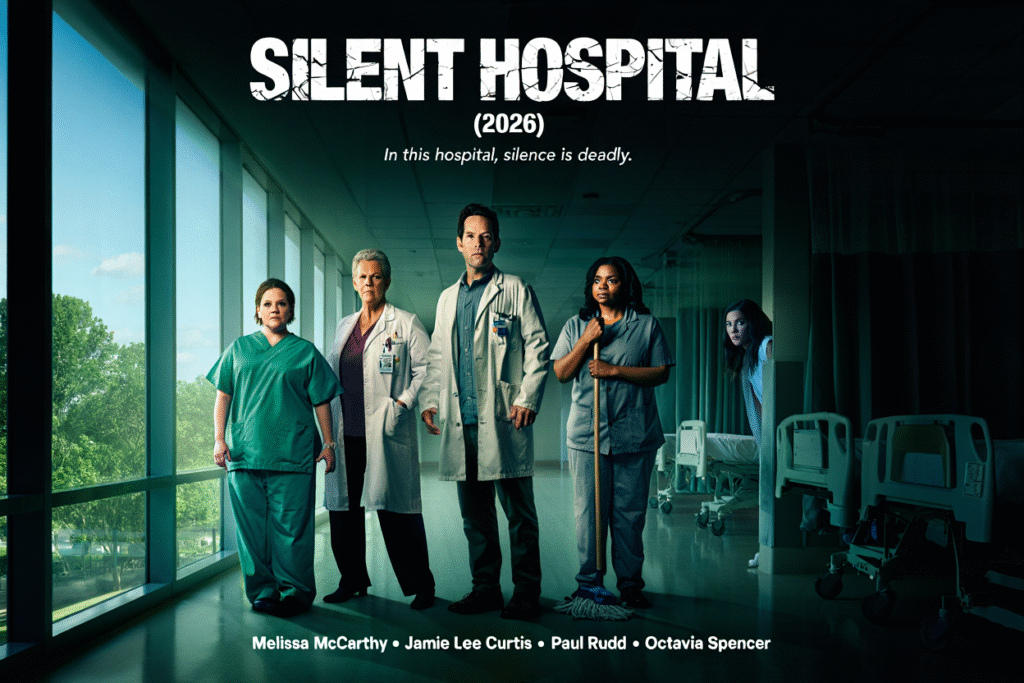
The hospital itself becomes a character—alive, shifting, almost sentient. Hallways don’t lead where they should. Doors lock without reason. Lights flicker not randomly, but deliberately, as if something is guiding the characters deeper into its grasp. It’s a labyrinth designed not just to trap bodies, but to disorient minds.
The ghost at the center of the story is handled with surprising depth. Rather than being a simple vengeful spirit, she represents something more tragic—a voice that was silenced in life, now reclaiming power through fear. The horror doesn’t just come from what she does, but from what was done to her.
Tonally, the film walks a delicate line between humor and terror, and for the most part, it succeeds. The comedy never fully undercuts the horror—instead, it highlights it. The laughter feels like a temporary escape, making the return to silence even more jarring.
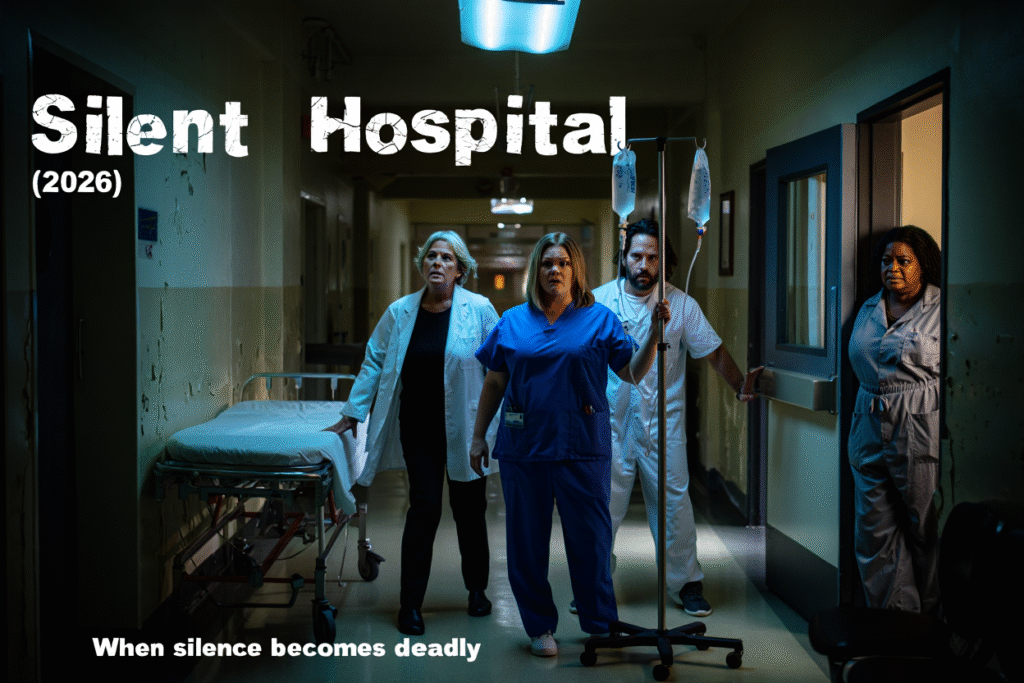
Visually, Silent Hospital leans into cold, clinical imagery—washed-out colors, harsh lighting, empty spaces that feel too large and too quiet. It creates a sense of isolation even when characters are standing just feet apart, reinforcing the idea that they are alone in ways they don’t fully understand.
As the story builds toward its climax, the tension becomes almost unbearable. The final confrontation doesn’t rely on spectacle, but on revelation—forcing the characters to confront not just the ghost, but the truth behind the silence that has haunted the hospital for so long.